Agencies
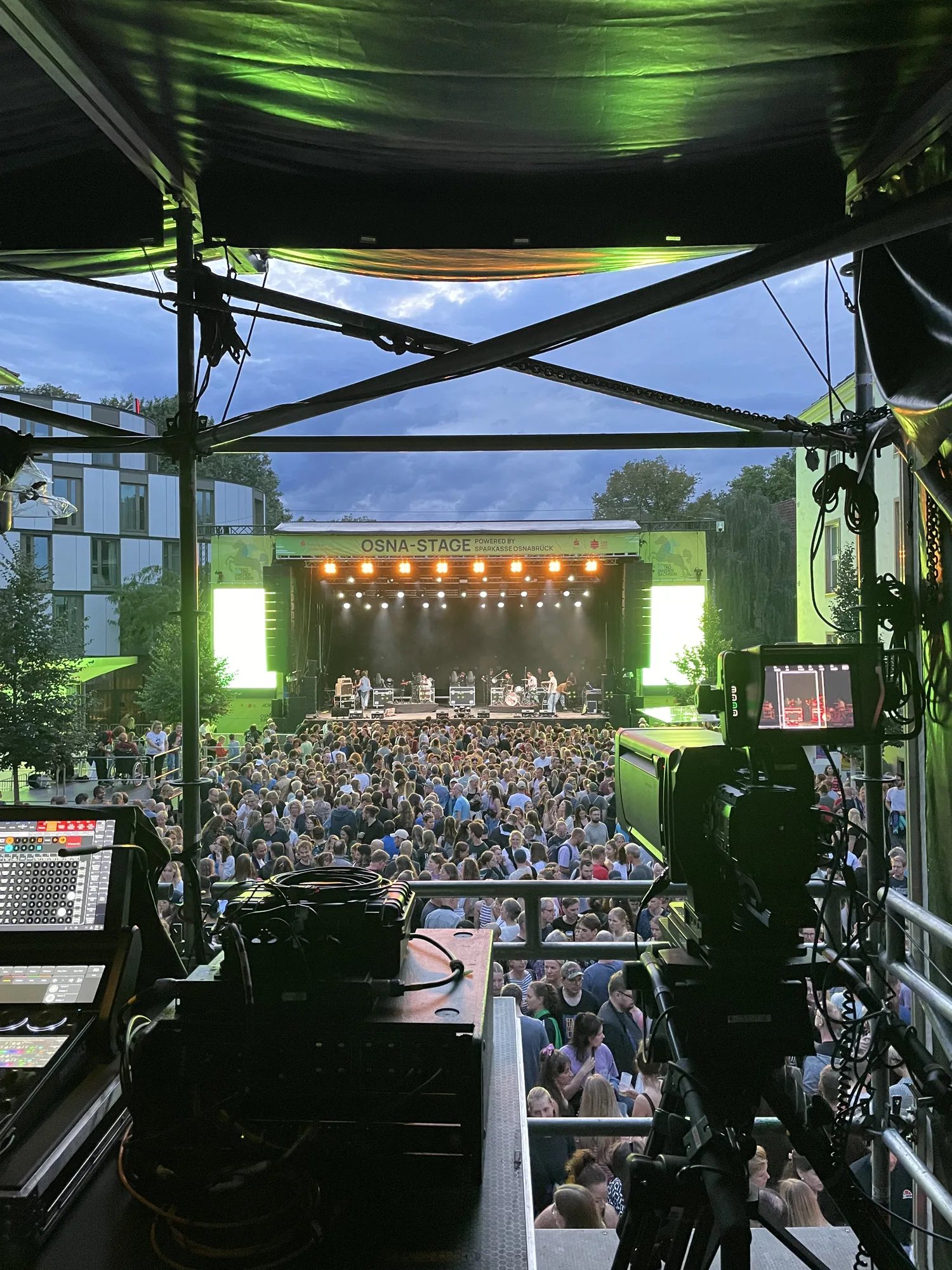
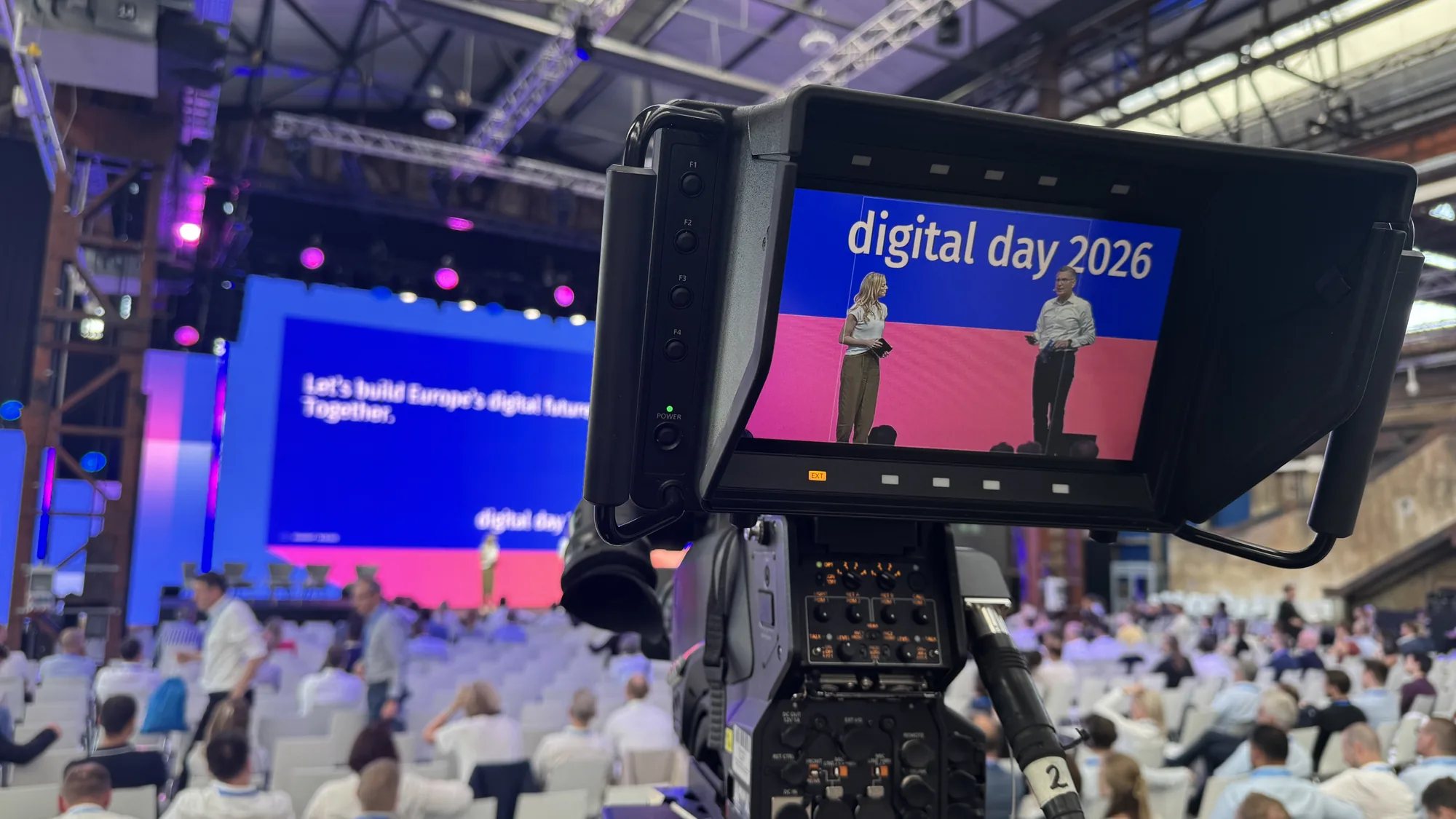
Live events where the stream must not fail. With measurement data you can show your client after the event.
WozzLink bonds several cellular networks, Starlink and LAN into one resilient connection and measures every section from the encoder to the receiver. For broadcasters, agencies and production companies, operated from Germany.
WozzLink grew out of everyday production work at show&tell. It is built for professionals who have to rely on their uplink and answer for it to their clients.
Live events where the stream must not fail. With measurement data you can show your client after the event.
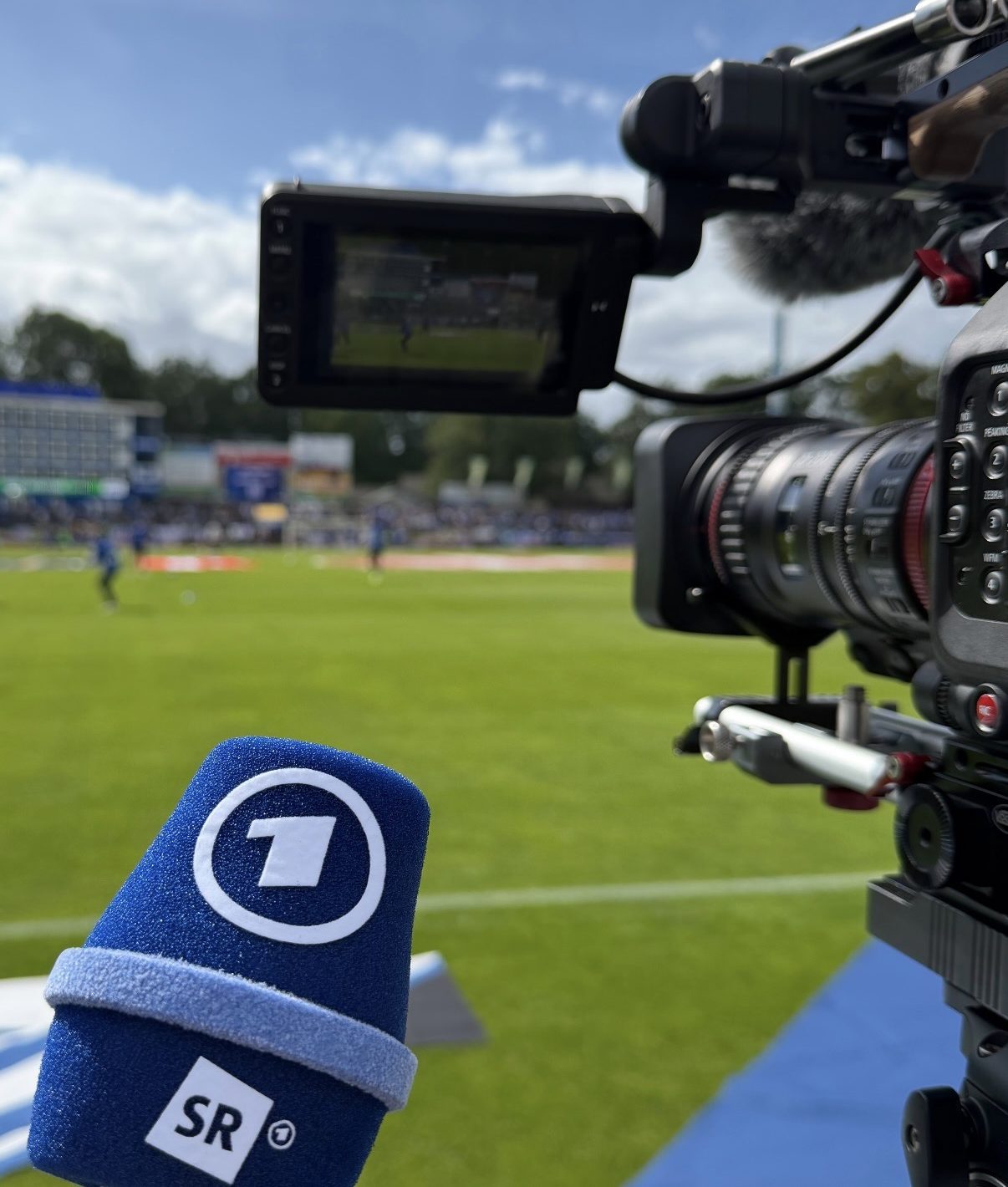
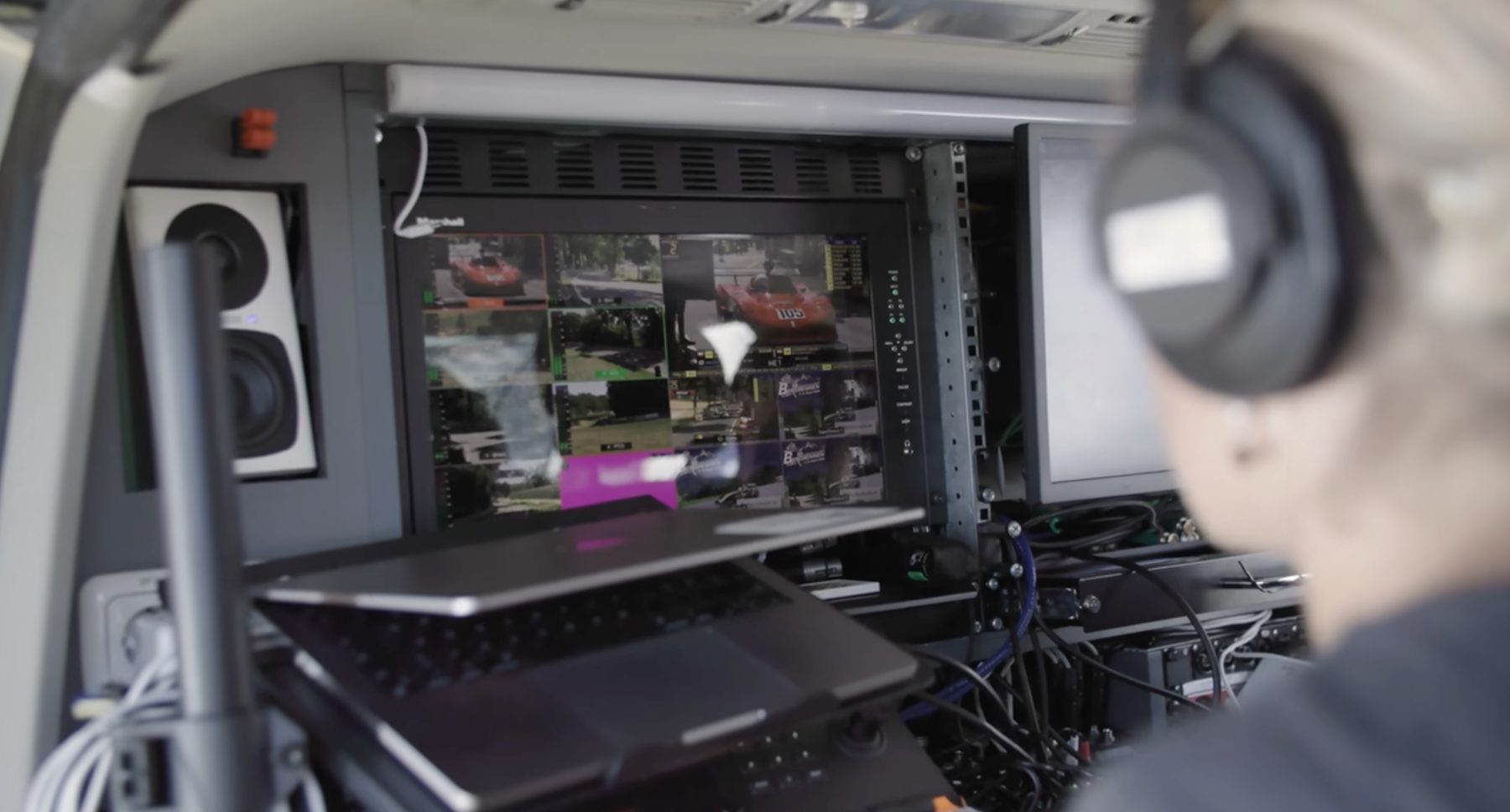
Remote feeds via SRT straight into the broadcast workflow, with no bonding licence of your own and no proprietary receiver. In use at Saarländischer Rundfunk.
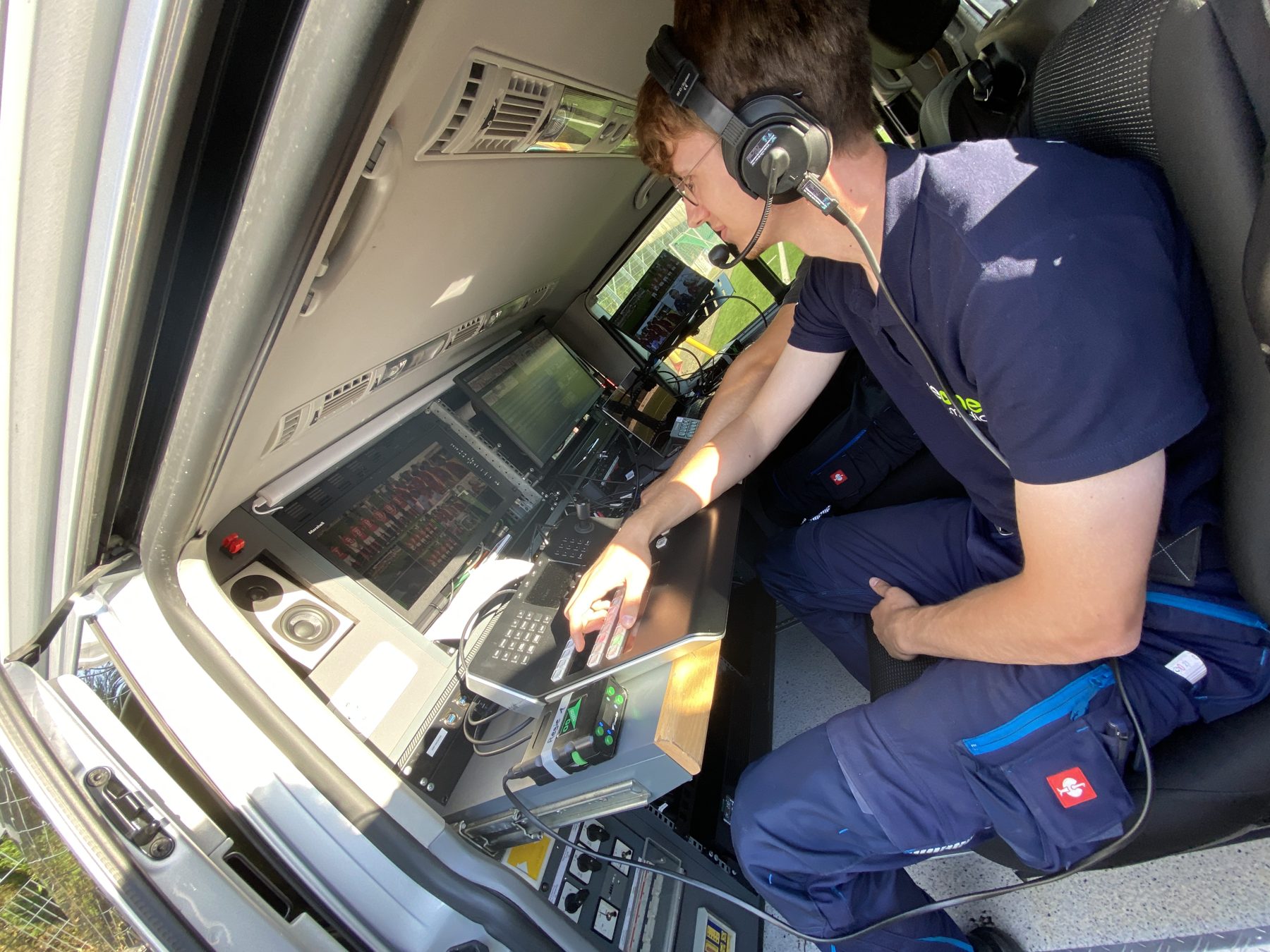
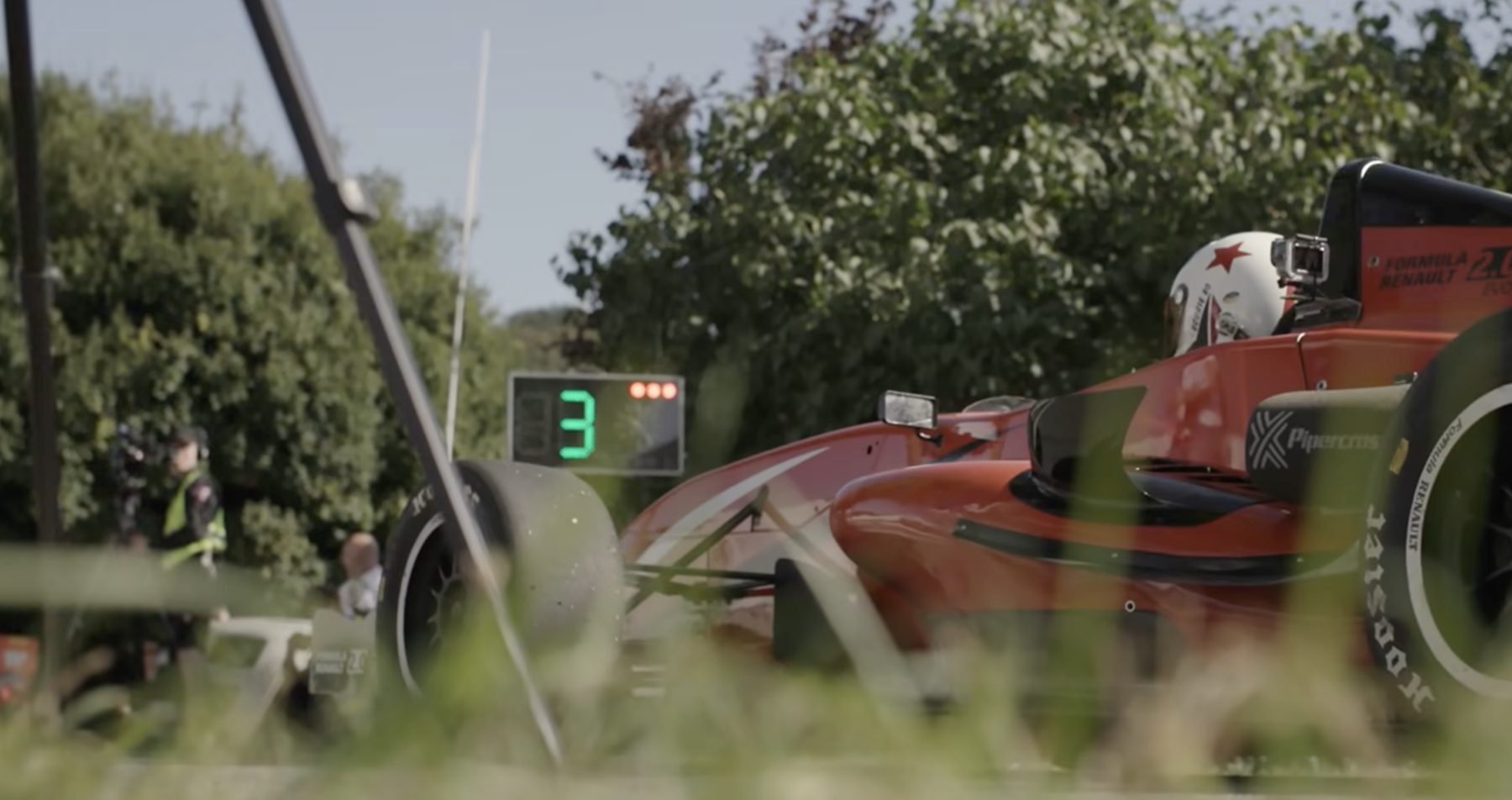
Outside productions without fibre, whether sport, culture or corporate. From a single job to permanent operation with several kits.
“In my opinion, the stability of WozzLink combined with the depth of its analysis data is unique in the market.”
Cameras, galleries and encoders have long been mature. The path from the venue to the receiver often is not: an overloaded cellular network, or a venue network nobody knows. If that one line fails, the broadcast fails.
Good IT knowledge helps, but it is not enough. Live video places its own demands on a network:
A frame that arrives late is lost. Live video can neither wait nor reload later.
A stream needs bandwidth all the time. Every fluctuation in the network shows up in the picture immediately.
Missing packets have to be resent before the buffer runs dry. Setting buffer and latency correctly takes experience.
Until now the choice has been to build something yourself or to buy a bonding system from the broadcast world. For many productions, neither really fits.
| Do-it-yourself setup | Broadcast system |  | |
|---|---|---|---|
| Setup | Routers, SIM cards and encoders, put together yourself | Proprietary system, built for broadcasters | Bonded uplink as a service |
| Reliability | Depends on one network and one person | High | High, by bonding several networks |
| Receiving end | Different every time, depending on the setup | Often requires dedicated receivers or licences | SRT or RTMP, existing equipment is enough |
| When things go wrong | Nobody can see where the problem is | Diagnostics via the manufacturer's system | Measurements for every section of the chain |
| Support | Whoever built it, if they can be reached | Through the manufacturer | Live support from production professionals |
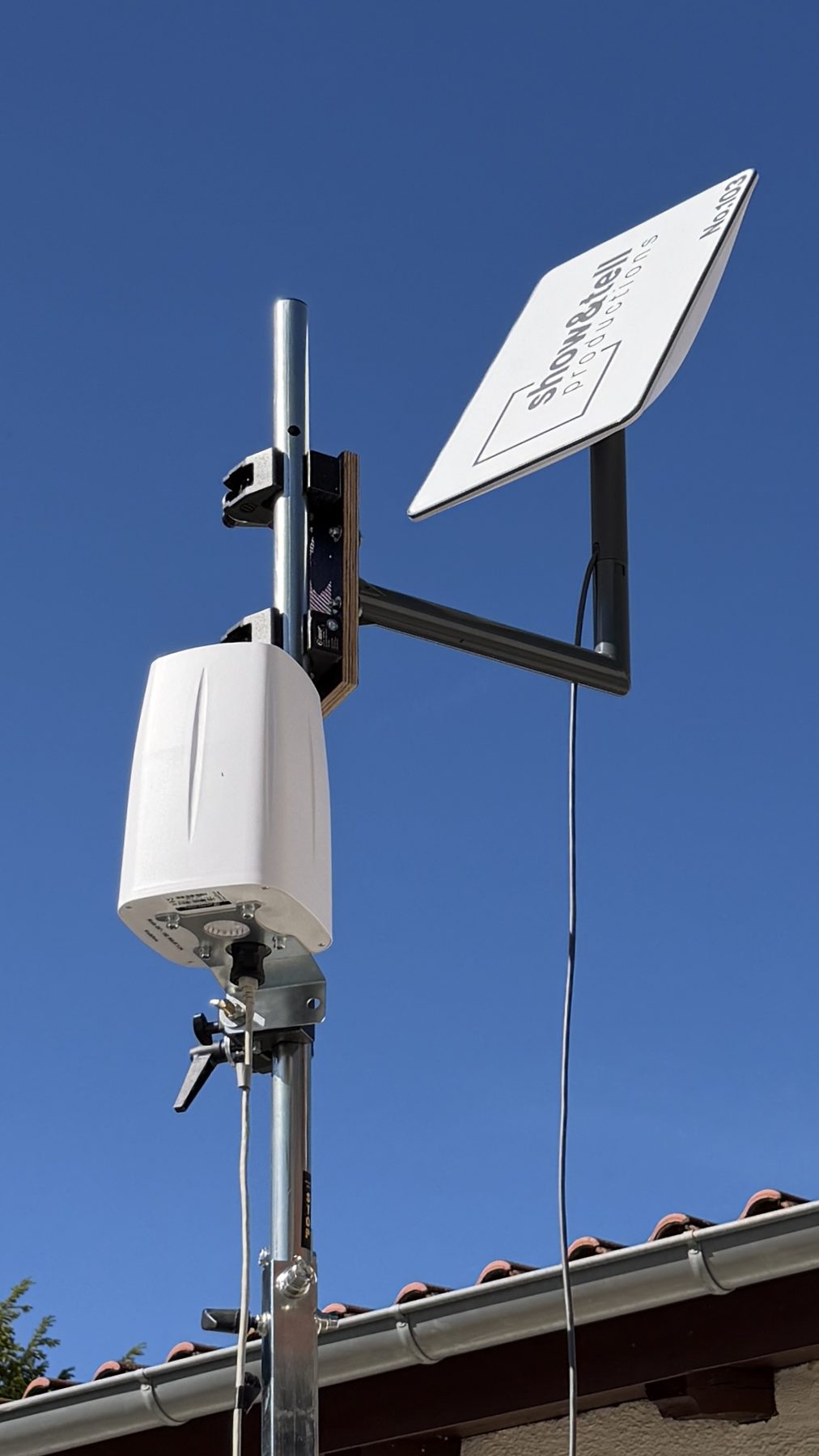
WozzLink spreads your signal across several cellular networks, Starlink and LAN at the same time and reassembles it on the server in Germany. If one network fills up or drops out, the others take over. Bandwidth and resilience add up.
Classic bonding systems work, but they often tie the receiving end to their own hardware and licences as well. WozzLink relies on open standards, full transparency and support from Germany.
The signal arrives via SRT or RTMP. Almost any receiving end handles that today, from encoders and vision mixers to streaming platforms and broadcast centres.
Saarländischer Rundfunk receives WozzLink feeds without a bonding licence of its own.
Throughput, latency and packet loss for each network individually, plus values from the server and the handover. Analysed live during the broadcast and in depth after the event.
How we measureA service of show&tell productions GmbH, Osnabrück. Servers in Germany, infrastructure with European providers, GDPR-compliant.
Available for as long as you are on air. From people who produce live themselves and see the same measurements you do. In German and English.
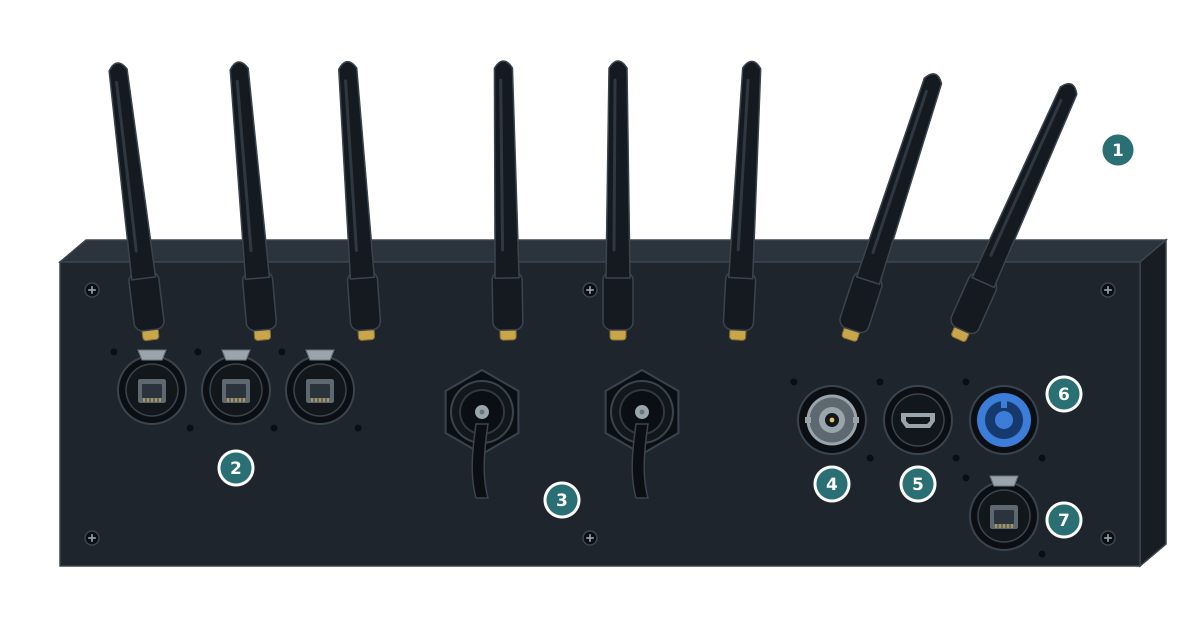
We supply everything a working uplink needs and take responsibility for it.
From the input at the kit through every single network to the handover to the receiver, each section delivers its own measurements. That narrows down whether a problem lies before or after us, live during the broadcast and in detail afterwards.
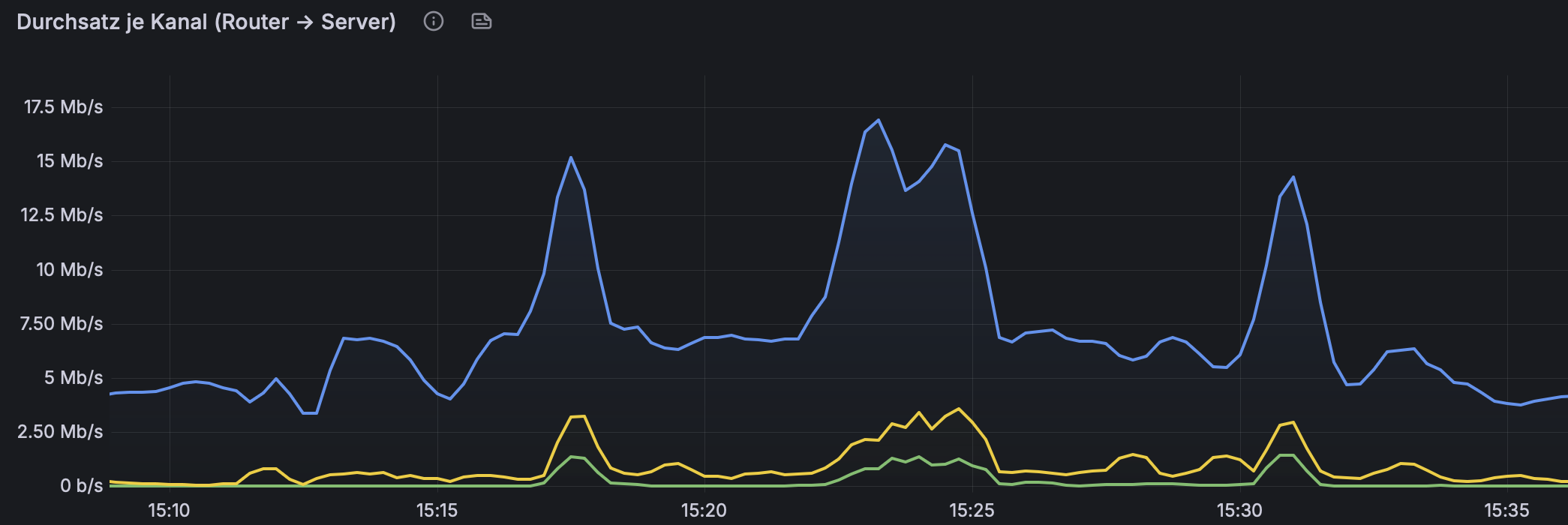
We do not just show the total, but how much actually reaches the server over each bonded cellular link. That makes it clear at once which network is carrying the load and which one is struggling.
Standard monitoring only shows what arrives. When the rate drops, it stays unclear whether the line is struggling or the encoder is simply sending less, for example during a calm scene. That is why we compare what is sent with what arrives at the server.
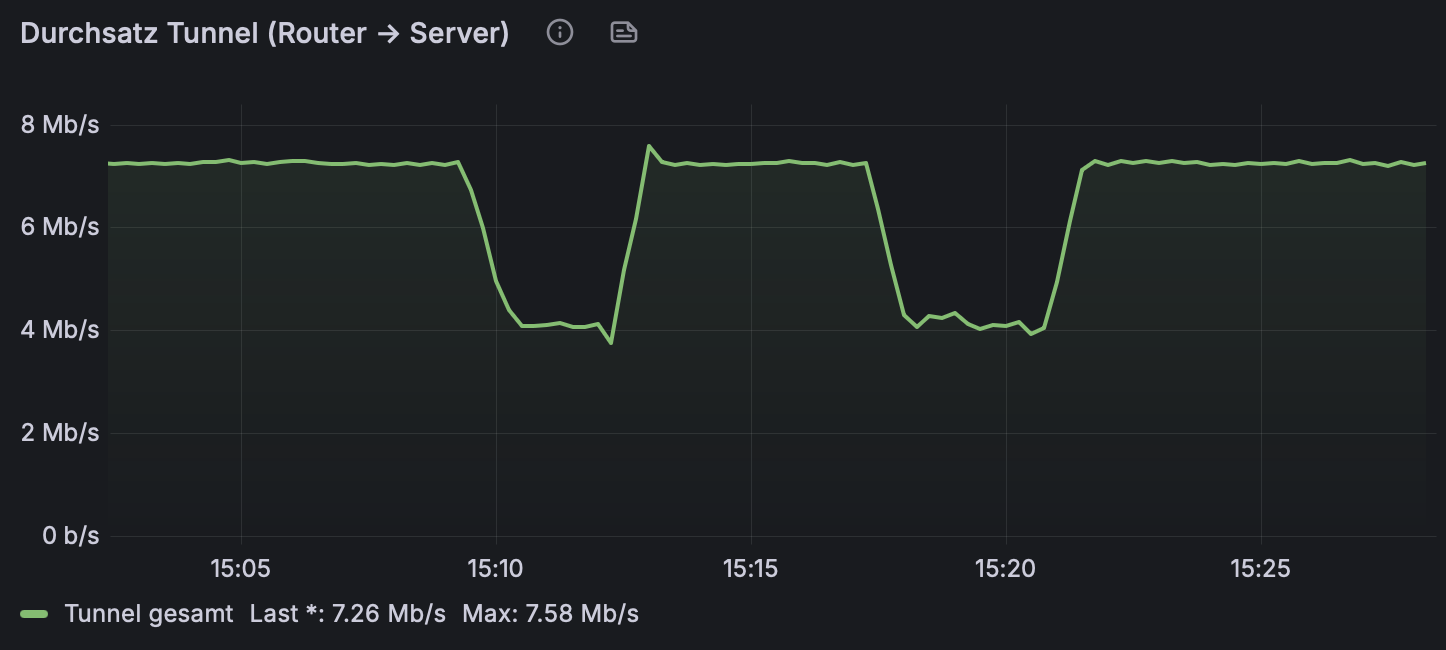
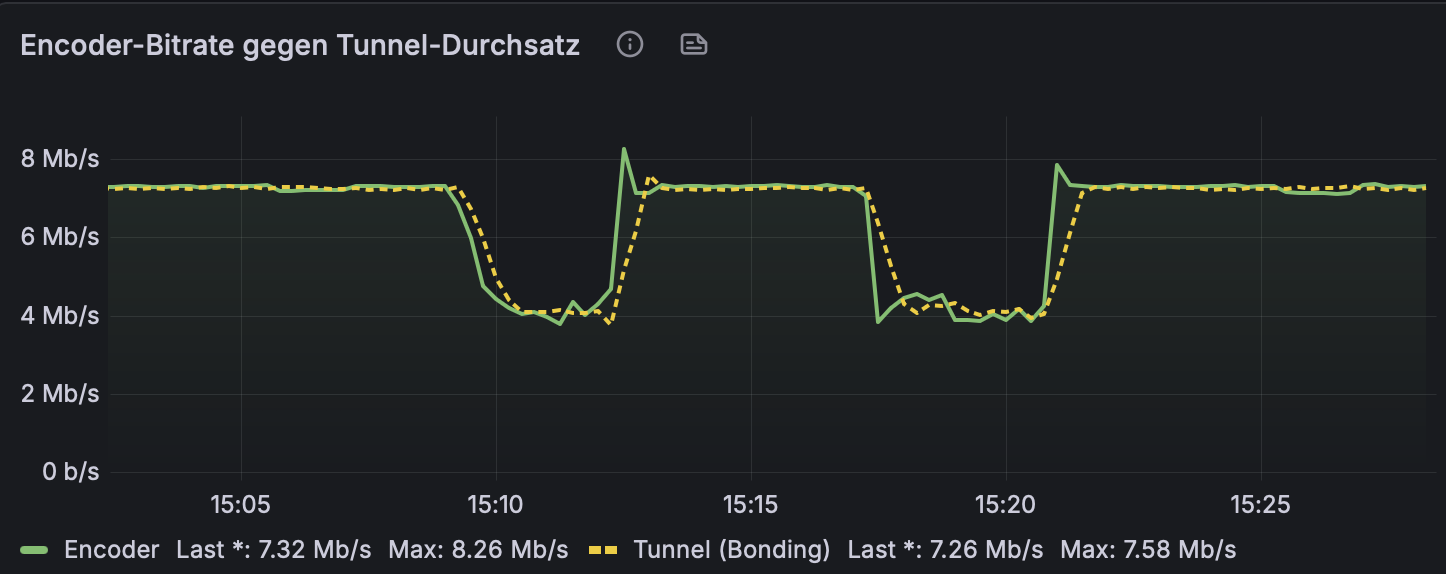
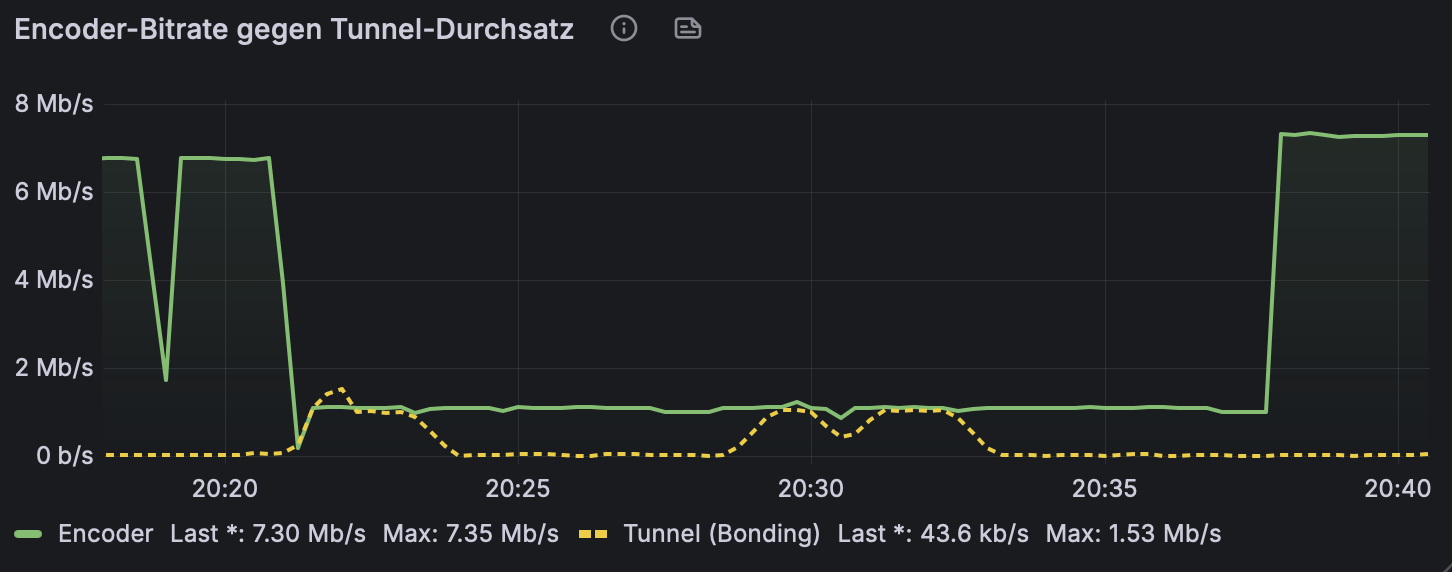
In standard monitoring both cases look the same. Only the comparison with the encoder shows whether you need to act.
Every fault has a location. Because we measure every section, we can see where the problem is and know which adjustment helps there.
| Section | What we see | What to adjust |
|---|---|---|
| Kit on site | Encoder bitrate, buffer | Match the bitrate to the available bandwidth, increase the buffer |
| The individual networks | Throughput, latency and packet loss per channel | Reposition the antenna, drop a weak network, add LAN or Starlink |
| Server in Germany | Reassembly, retransmits, jitter | Rebalance latency and buffer between safety and delay |
| Handover | Connection and quality to the receiver | If the problem lies after us, the data shows it, and the receiving end can be addressed directly |
The measurements are not just for the moment. We analyse them during the broadcast and again in depth after the event.
You and our support team see all values in real time: throughput per network, encoder versus tunnel, status of server and handover. We spot anomalies before they reach the picture and can act straight away.
We analyse the transmission data of the entire job in detail: how the networks behaved, where there were bottlenecks, and what can be improved at the location next time. We record the results in the measurement report.
After every broadcast you receive a measurement report covering the entire broadcast. It documents that the transmission on your side was carried out correctly.
No. WozzLink delivers via SRT or RTMP, both open standards. Any receiving end that accepts either protocol can receive the signal.
Several cellular networks (5G and LTE), Starlink and LAN, depending on what is available on site.
In Germany, on our own infrastructure with European providers. Signal and measurement data stay in Europe.
For the on-site network, often yes. But live video has its own requirements for real-time delivery, constant load and handling packet loss. WozzLink adds exactly that part to your IT, with support during the broadcast.
Tell us what you are transmitting, from where and to where. We will get back to you within one working day.